Mirissa Beach
Best Time to Visit
The dry season on the south coast runs from November to April. Whale watching season is December to April, with peak sightings in February and March.
Overview
Mirissa is a small but perfectly formed beach town on Sri Lanka’s southern coast. Its crescent-shaped bay of golden sand backed by swaying palm trees has made it one of the island’s most beloved destinations. But Mirissa is more than just a beautiful beach — it’s also one of the best places in the world for whale watching, with blue whales and sperm whales regularly spotted just off the coast.
The Beach
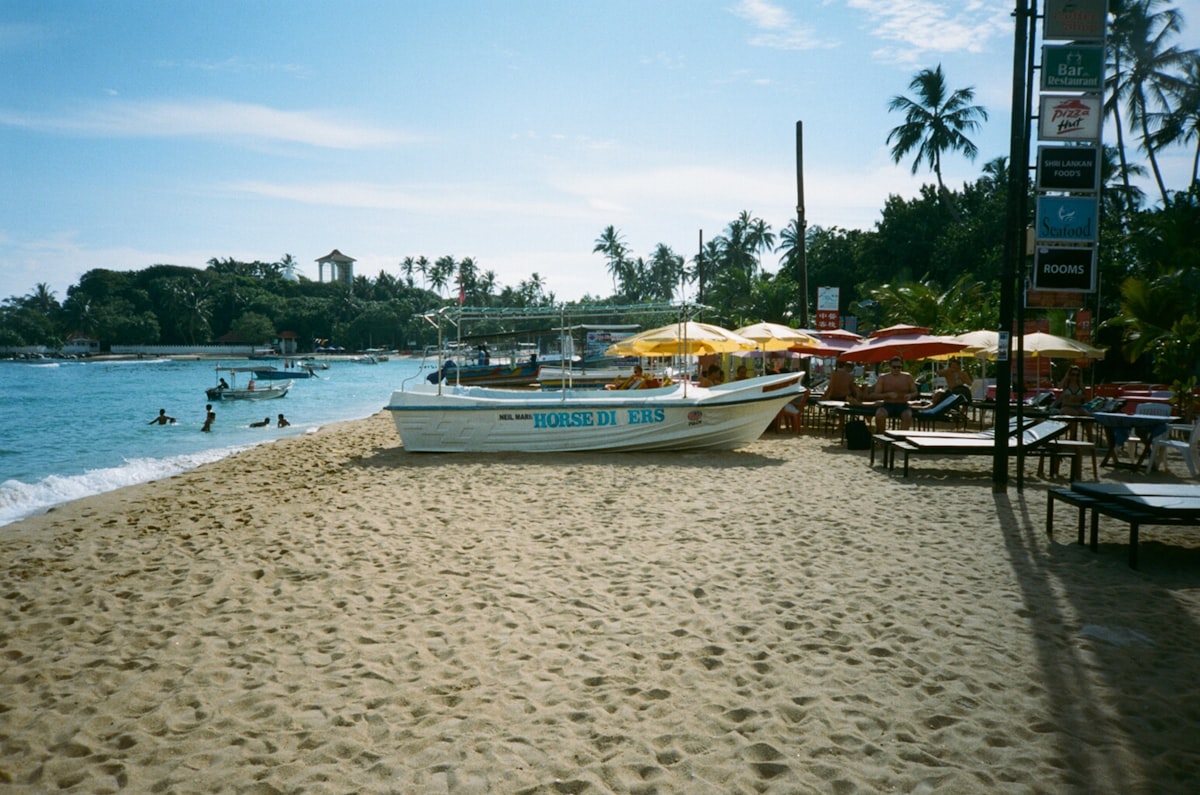
Mirissa’s main beach curves gently for about 1.5 km, with calm waters at the western end (perfect for swimming) and better waves at the eastern end (ideal for surfing). The beach is backed by a mix of palm trees, guesthouses, and beach restaurants.
Coconut Tree Hill
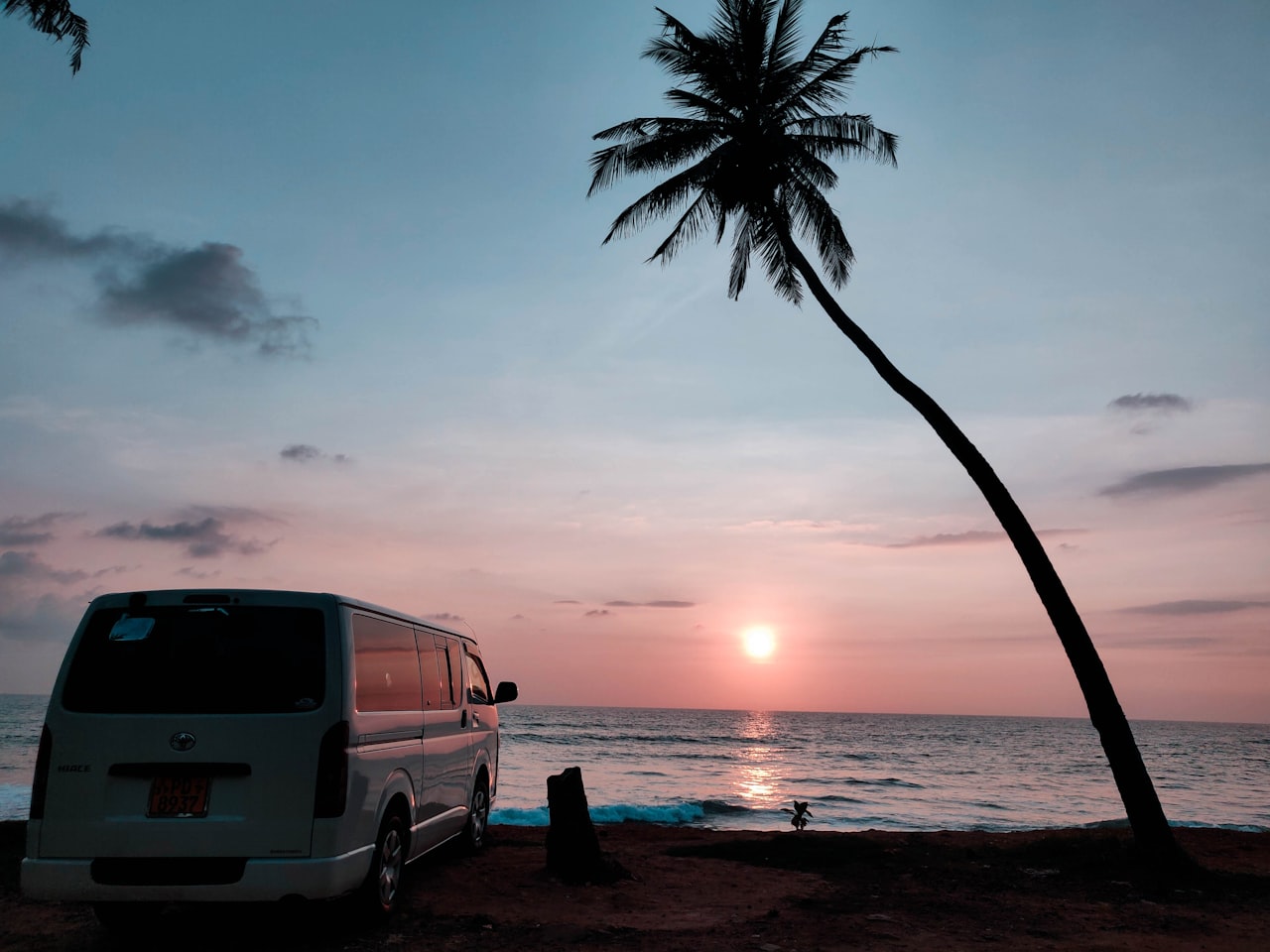
This small headland covered in perfectly spaced coconut palms has become Mirissa’s signature viewpoint and one of the most photographed spots in Sri Lanka. It’s a short walk from the main beach and is especially beautiful at sunrise and sunset.
Parrot Rock
A small rocky island connected to the eastern end of the beach, accessible at low tide. It offers panoramic views of the entire bay.
Whale Watching
Mirissa is one of the top whale-watching destinations in the world. From November to April, blue whales — the largest animals ever to have lived on Earth — migrate through the waters just 5–10 km off the coast. Sperm whales, fin whales, and dolphins are also regularly sighted.
Whale-watching trips depart early morning (around 6:30 AM) and last 4–5 hours. Prices range from LKR 7,500 to LKR 15,000 depending on the operator and boat type. Choose a responsible operator that follows ethical guidelines for distance from the whales.
Surfing
Mirissa offers beginner to intermediate surf breaks. The main break is a reef break at the eastern end of the beach, best from November to March. Several surf schools operate on the beach offering lessons and board hire.
Tips for Visitors
- Whale watching: Book a morning trip during February-March for the best chances. Take seasickness medication if prone to motion sickness.
- Sunset point: Coconut Tree Hill gets crowded at sunset. Arrive 30 minutes early for a good spot.
- Beach safety: Swim within the flagged areas. Currents can be strong, especially during the monsoon transition.
- Stay 2–3 nights: Mirissa is perfect for relaxing. Don’t rush through.
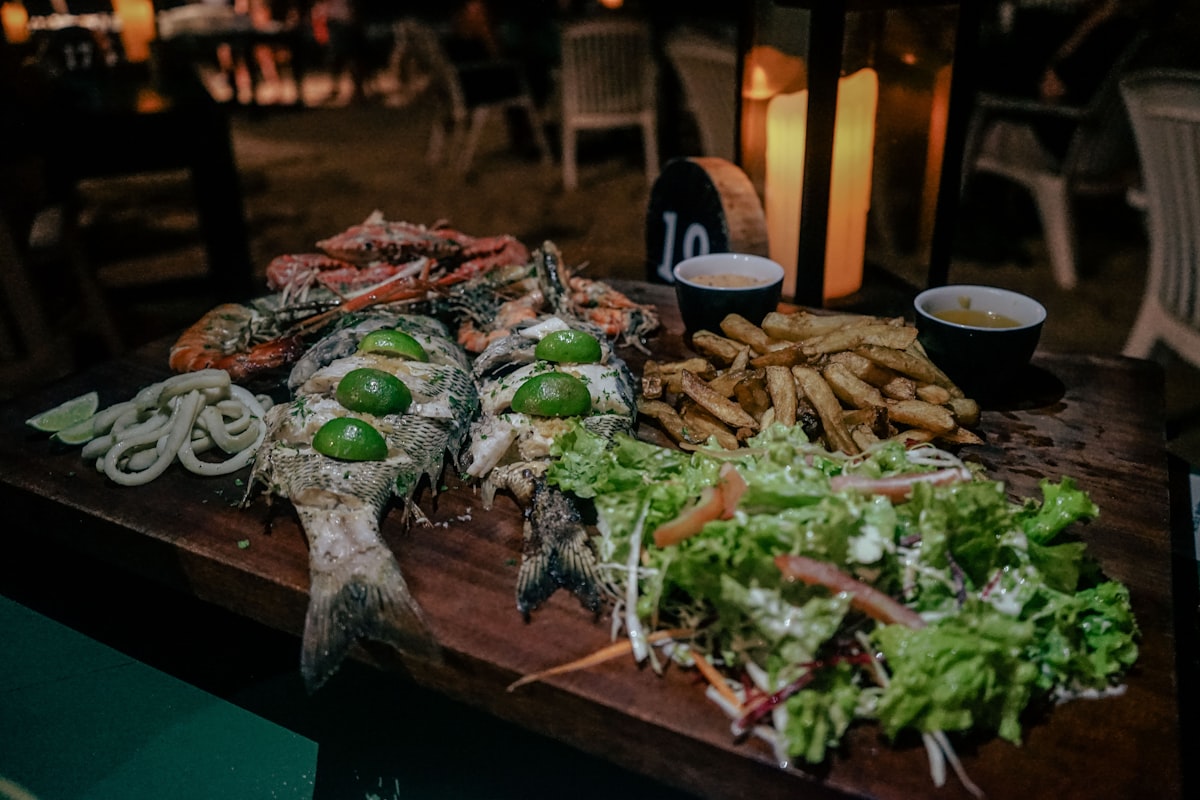
- Fresh seafood: The beach restaurants serve excellent grilled fish — the catch of the day is always the best choice.
Blue Whale Watching in Mirissa
Mirissa is consistently ranked among the world’s premier blue whale watching destinations. The deep ocean trenches off Sri Lanka’s southern coast form part of a major blue whale migration corridor, and the fact that these deep channels lie just 5–10 km from shore makes Mirissa uniquely well-placed for close, reliable encounters. Blue whales — the largest animals ever to have lived on Earth at up to 30 metres in length — are regularly spotted surfacing alongside whale-watching boats from November through April.
Sperm whales are also common off Mirissa, capable of diving to 2,000 metres and holding their breath for over an hour. Pods of spinner dolphins frequently escort the boats, and fortunate visitors occasionally spot fin whales, Bryde’s whales, and even orca. The combination of blue whale and dolphin sightings in a single trip makes the Mirissa whale watching experience one of the most rewarding wildlife encounters in Asia.
Choosing a Responsible Whale Watching Operator in Mirissa
Not all operators follow ethical guidelines. When booking a blue whale watching trip in Mirissa, look for operators registered with the Sri Lanka Tourism Development Authority (SLTDA) who maintain a respectful distance from the animals, limit engine noise near surfacing whales, and cap passenger numbers to reduce disturbance. Trips depart early morning at around 6:30 AM and last 4–5 hours. Prices range from LKR 7,500 to LKR 15,000. Taking anti-seasickness medication the night before is strongly recommended for those prone to motion sickness.
Photo Gallery
How to Get There
By Train
LKR 200 - LKR 800The coastal train journey offers stunning ocean views. From Weligama, a tuk-tuk to Mirissa costs about LKR 300-500.