Sigiriya Lion Rock Fortress
Best Time to Visit
The dry seasons offer the clearest skies and most comfortable climbing conditions. Arrive early morning (7:00 AM) to avoid both the heat and the crowds.
Overview
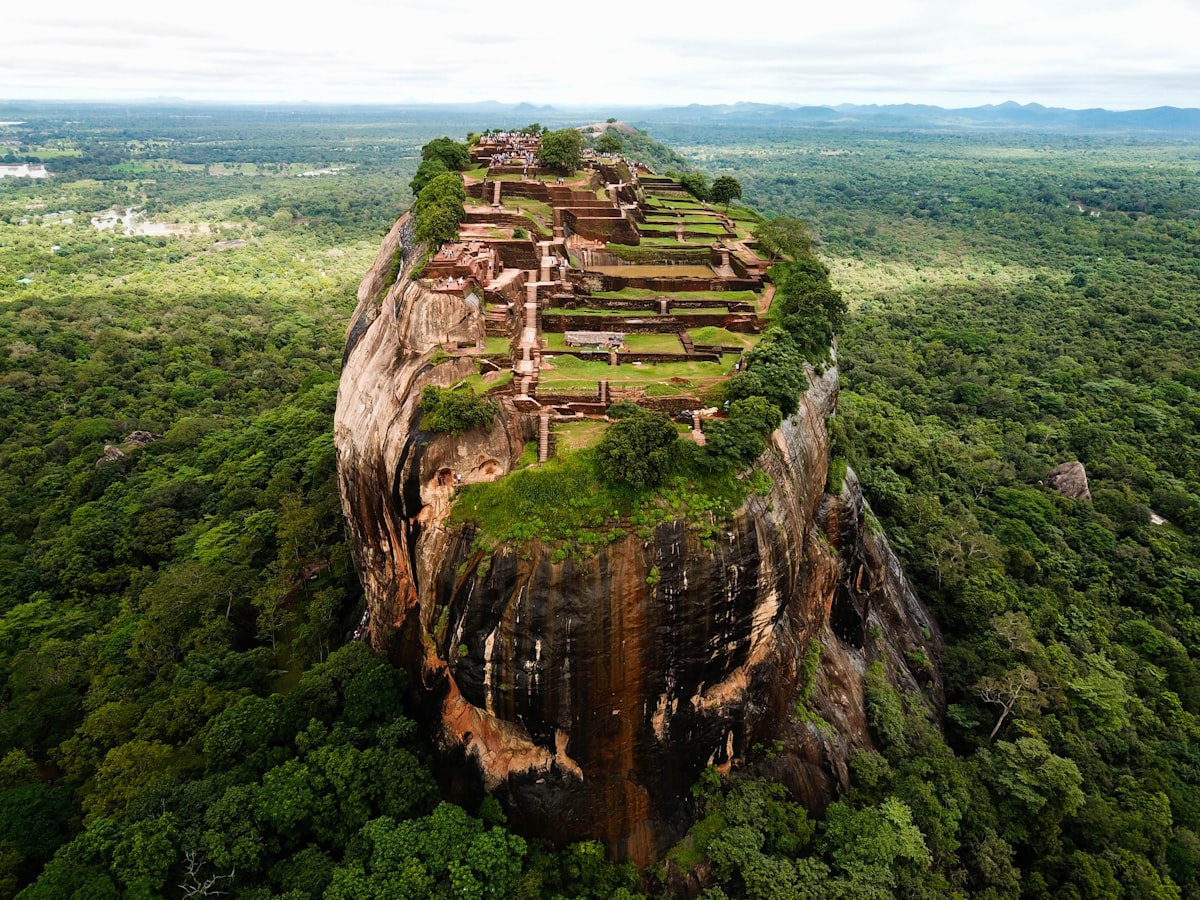
Rising dramatically 200 metres above the surrounding plains, Sigiriya — or Lion Rock — is arguably Sri Lanka’s most spectacular archaeological site. This ancient fortress was built during the reign of King Kashyapa I (477–495 CE), who chose this imposing granite monolith as the site for his new capital after seizing the throne from his father.
Today, Sigiriya stands as a UNESCO World Heritage Site and one of the best-preserved examples of ancient urban planning in Asia.
History
The history of Sigiriya stretches back to prehistoric times, with evidence of human habitation in the surrounding caves dating to around 3000 BCE. Buddhist monks used the rock shelters as meditation retreats from the 3rd century BCE onwards.
The fortress as we know it today was constructed by King Kashyapa I, who reportedly fled to the rock’s summit after orchestrating the murder of his father, King Dhatusena. After Kashyapa’s death in 495 CE, the site was returned to the Buddhist monks and served as a monastery until the 14th century.
What to See
The Water Gardens
Begin your visit at the western entrance where you will find the beautifully symmetrical water gardens. These are some of the oldest landscaped gardens in the world, featuring sophisticated hydraulic engineering including fountains that still function during the rainy season.
The Frescoes
Partway up the rock face, a sheltered gallery houses the famous Sigiriya frescoes depicting celestial nymphs. Of the estimated 500 original paintings, only 22 survive, but they remain remarkably vivid after 1,500 years.
The Mirror Wall
Below the frescoes, the Mirror Wall was once polished to such a sheen that the king could see his reflection. Ancient visitors scratched poems and commentary into its surface — some of the oldest surviving Sinhalese prose.
The Lion’s Paw Entrance
Two enormous lion’s paws flank the final stairway. These are all that remain of a colossal lion figure through whose open mouth visitors once entered the upper palace.
The Summit
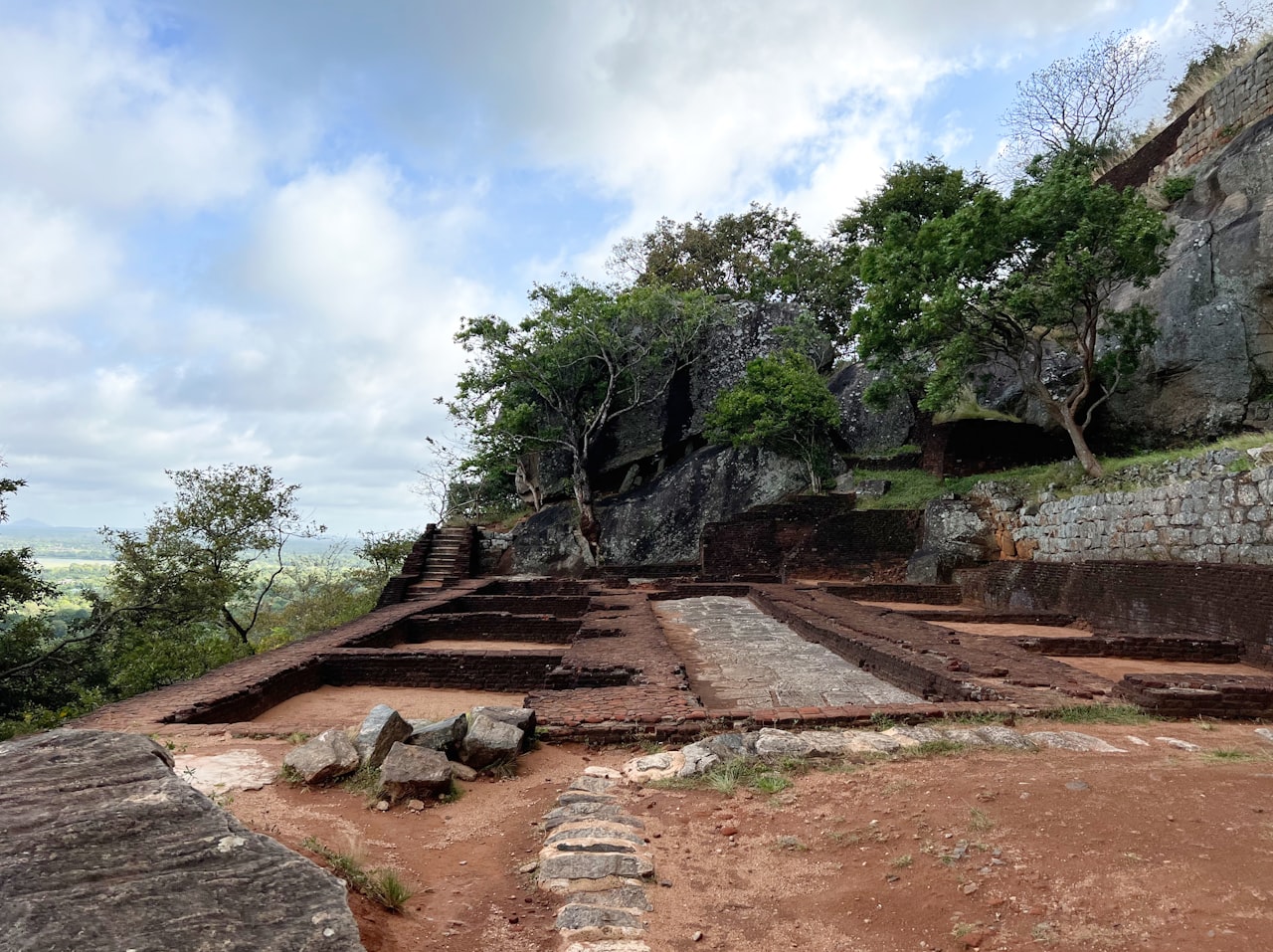
At the top, the remains of the upper palace sprawl across 1.6 hectares. The views are extraordinary — on a clear day you can see as far as the central highlands.
Tips for Visitors
- Arrive early: The gates open at 7:00 AM. Arriving at opening time means cooler temperatures and fewer crowds.
- Wear comfortable shoes: The climb involves approximately 1,200 steps and takes 1.5–2 hours.
- Bring water: There are limited facilities on the rock itself.
- Watch for wasps: Hornet nests are occasionally found on the rock face. Follow ranger instructions.
- Allow half a day: Most visitors spend 3–4 hours at the site.
Sigiriya Fortress — Ancient Wonder of Asia
The Sigiriya Rock Fortress, also referred to as Sigiriya fortress or Lion Rock Fortress, is recognised internationally as one of Asia’s greatest archaeological achievements. Built by King Kashyapa I in the 5th century CE, the Sigiriya fortress encompasses not just the fortified summit palace but an elaborate series of gardens, moats, and hydraulic systems spread across 16 hectares at the base of the rock. The site was unknown to the Western world until rediscovered by British archaeologist H.C.P. Bell in 1894, and UNESCO inscribed it as a World Heritage Site in 1982.
Archaeological excavations have revealed sophisticated urban planning at Sigiriya fortress that rivals ancient cities of the same era anywhere in the world. The combination of a near-impregnable natural stronghold, refined palace architecture, world-class fresco painting, and advanced water engineering makes the Sigiriya rock fortress unique among ancient sites in Asia — and a compelling reason it consistently ranks as Sri Lanka’s most visited attraction.
Why Sigiriya is Called Lion Rock Fortress
The name Sigiriya derives from the Sinhala words Sinha (lion) and Giri (rock or throat). At the final approach to the summit, visitors once passed through the open mouth of a colossal lion sculpture carved directly from the rock face — a breathtaking entrance to the upper palace. Only the enormous lion’s paws survive today, but they convey the original scale and ambition of this 5th-century fortress clearly.
Photo Gallery
How to Get There
By Bus
LKR 400 - LKR 900Air-conditioned intercity buses available on the Colombo-Dambulla route
Private Vehicle
LKR 12,000 - LKR 18,000Can combine with visits to Dambulla Cave Temple and Minneriya National Park
By Tuk-tuk
LKR 1,500 - LKR 2,500Entrance Fees
| Visitor Type | Adult | Child |
|---|---|---|
| Sri Lankan Visitors | LKR 50 | LKR 25 |
| Foreign Visitors | $30 | $15 |